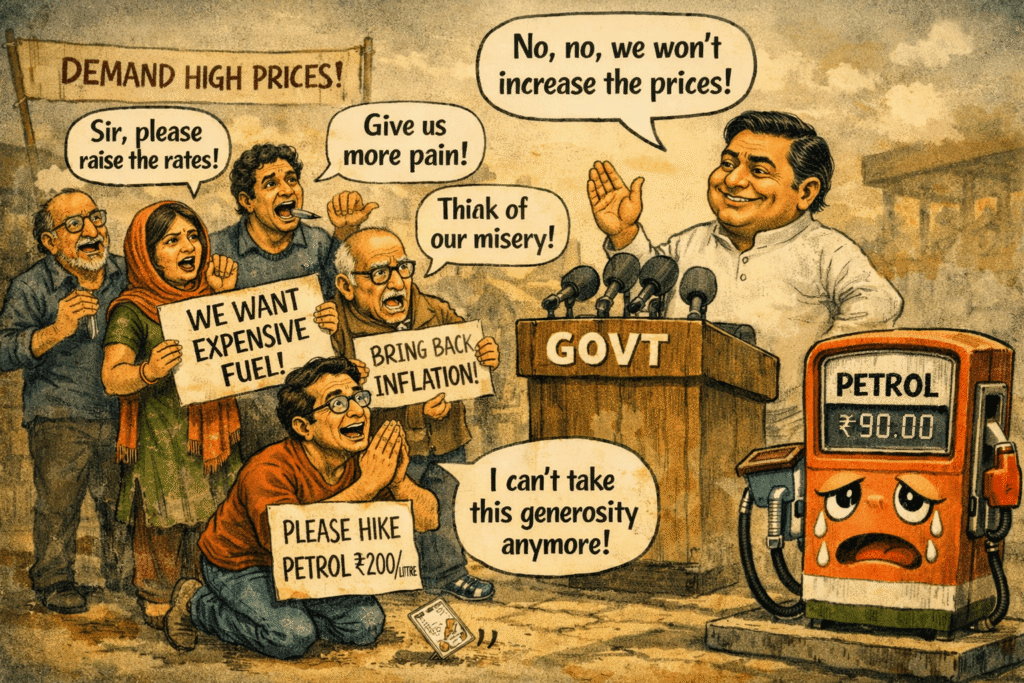
The elections are over, results have been declared in Bengal, Tamil Nadu, Assam, Puducherry, and Kerala, and the political drama has finally settled into its usual rhythm of victory speeches and opposition outrage. Yet amid the confetti and slogans, a new chorus has emerged from the streets: citizens demanding higher petrol and gas prices. “Why are you not increasing rates even after the results?” shouted one protester outside a fuel station, waving a placard that read We Deserve More Suffering. The government, however, stood firm in its refusal, insisting that generosity must prevail, leaving the public confused about how to complain properly in this new political season.
Opposition leaders quickly seized the moment, accusing the ruling party of cruelty for keeping fuel prices stable. “This is a betrayal of democracy,” thundered one leader at a rally. “How can citizens suffer with dignity if petrol remains affordable?” The crowd roared in agreement, chanting for inflation as if it were a fundamental right. WhatsApp groups lit up with memes demanding ₹200 per litre, while Twitter debates raged over whether true patriotism meant paying more at the pump.
Economists, meanwhile, are baffled. Normally, rising fuel prices trigger outrage, but this time the outrage is about prices not rising fast enough. One analyst explained, “Citizens have grown addicted to misery. Without regular hikes, they feel empty inside.” The stock market responded in kind, selling happiness and buying despair futures. Television anchors debated whether the government’s refusal to raise prices was a bold act of kindness or a cowardly denial of the people’s right to complain.
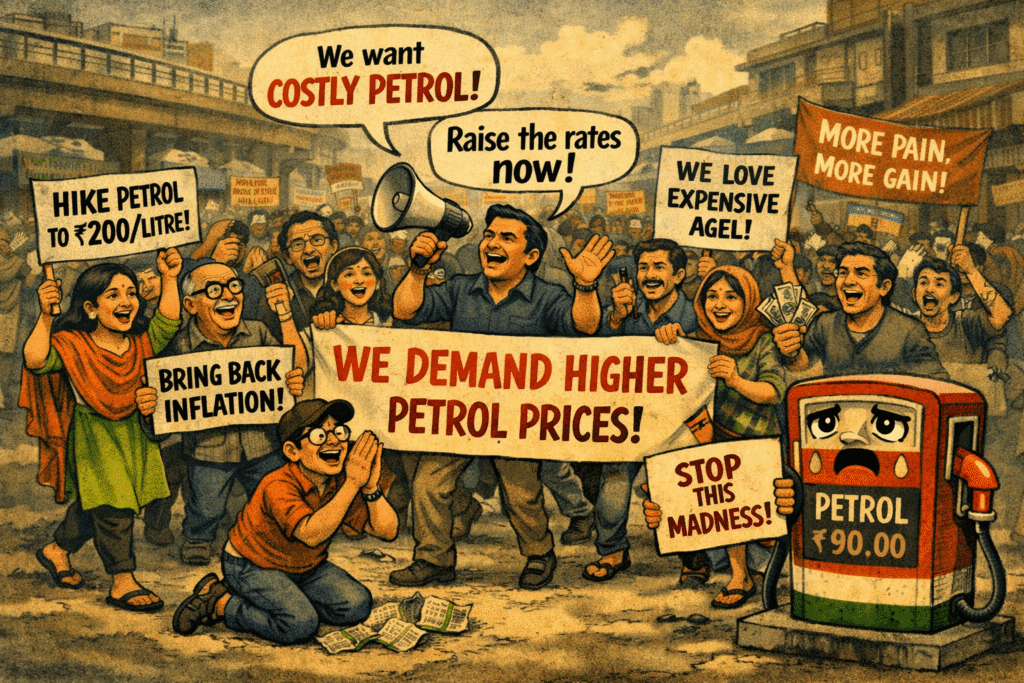
At petrol pumps, the drama is surreal. Drivers kneel before attendants, pleading for higher rates. Some even offer bribes to pay extra per litre. One pump worker confessed, “Yesterday a man asked me to charge him double. When I refused, he cried and said I was destroying his lifestyle.” Families now visit fuel stations not to refuel but to stage protests, demanding that the government stop spoiling them with stability. The pumps themselves seem exhausted, with one reportedly sighing, “I can’t take this generosity anymore.”
Meanwhile, ministers continue to resist the pressure. “We cannot allow citizens to suffer endlessly,” said one spokesperson, before being booed by a crowd chanting Raise It, Raise It. The irony is complete: in a country where elections are fought over promises of relief, the people now demand pain as proof of democracy. If this continues, citizens may soon petition for electricity cuts, water shortages, and potholes on demand. After all, what is freedom if not the right to suffer stylishly?