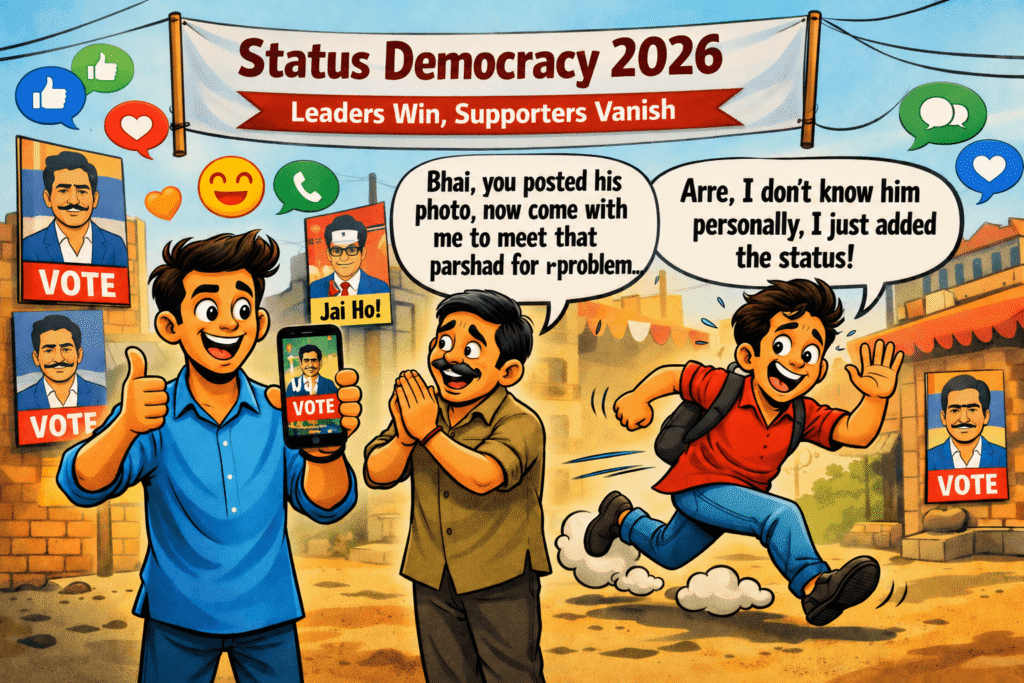
Election season in Rajasthan has arrived, and the real battleground isn’t the polling booth — it’s WhatsApp. Every second contact now has a candidate’s photo as their status, proudly declaring support. But when a friend says, “Bhai, you know this parshad, come with me to talk about my problem,” the supporter suddenly develops amnesia. The candidate is only available in pixels, not in person.
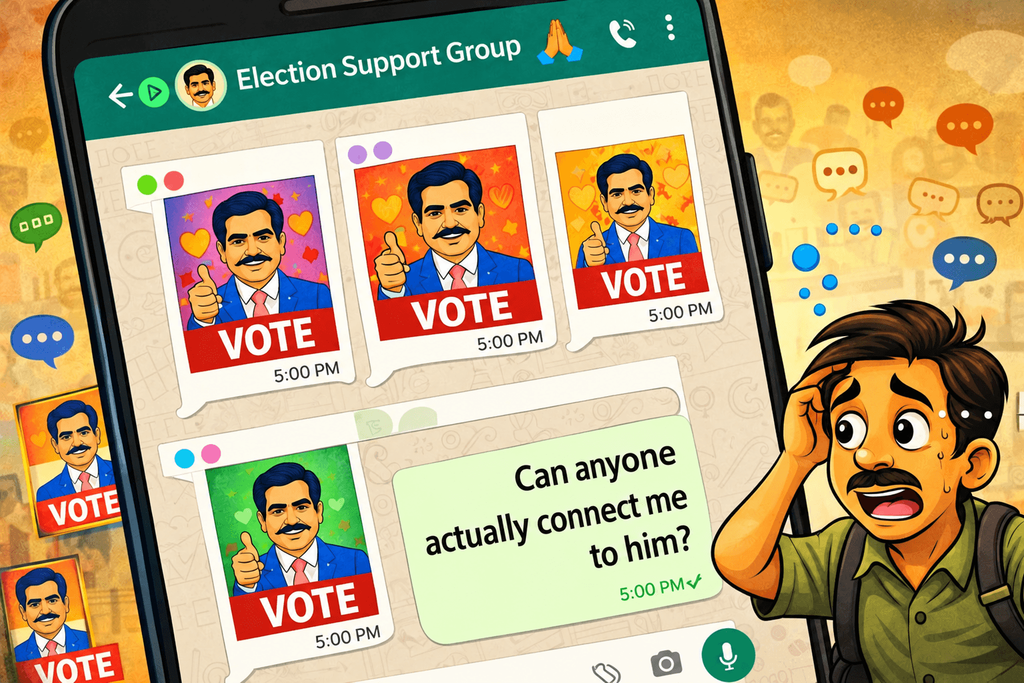
Forget rallies and speeches; the new campaign strategy is “DP politics.” Candidates don’t need to meet voters — they just need your profile picture. It’s cheaper than banners and more viral than pamphlets. The irony? These digital cheerleaders can’t even spell the candidate’s name when asked, but they’ll happily forward ten memes about him.
The satire bites hardest when the common man asks for help. “You posted his photo, now come with me to meet him.” Suddenly, the supporter replies, “Arre, I don’t know him personally, I just liked the status.” It’s the political version of ghosting: loud online, invisible offline. Leaders win elections on the strength of people who will never actually knock on their door.
This election has turned into a sticker pack. Support is measured in emojis, not in action. People change their DP faster than they change their socks, but when asked to accompany someone to the parshad’s office, they vanish faster than free Wi‑Fi. The satire writes itself: democracy outsourced to WhatsApp, accountability outsourced to silence.
In the end, Rajasthan’s Nagar Nigam elections prove one thing: politics has become a status message. Leaders don’t need to serve; they just need to trend. And supporters don’t need to help; they just need to share. Tomorrow, votes will be cast, but today, the real question remains — when a friend asks you to stand by the candidate you promoted, will you show up, or will you run away saying, “I don’t know him, I just added the status”?