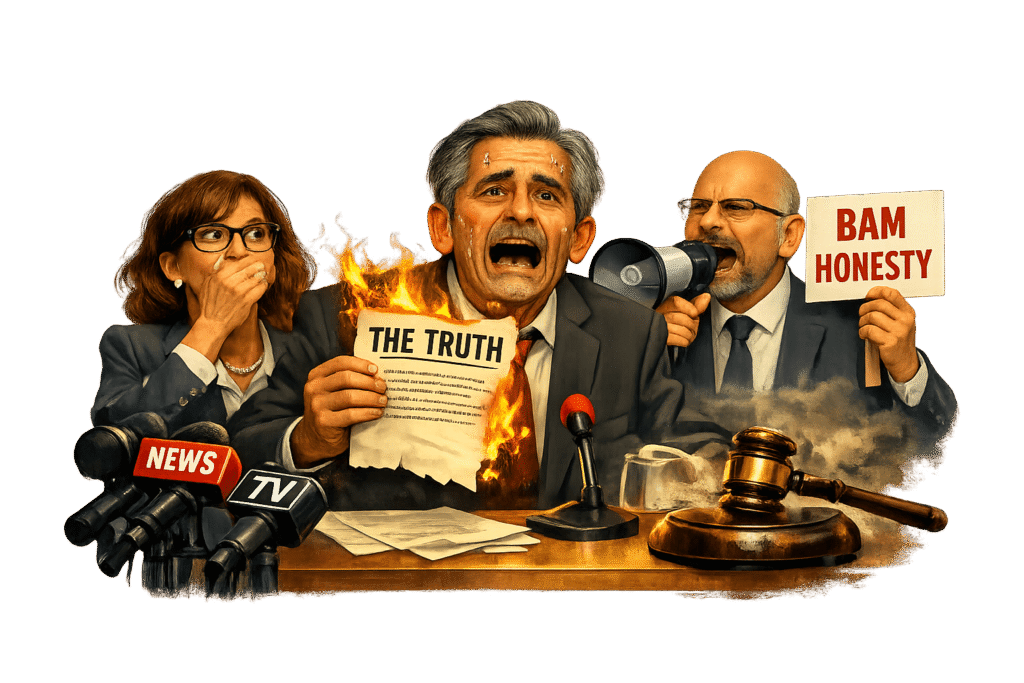
The government quietly passed a law outlawing honesty, and officials celebrated with a statement full of curated feelings and zero facts. Press conferences have been replaced by synchronized nodding, inspirational slides, and ceremonial applause; journalists are now encouraged to submit interpretive summaries instead of follow‑ups. Citizens report an odd calm that quickly curdles into confusion when they can no longer tell whether leaders are lying or simply very committed to positive vibes.
Startups and opportunists moved fast: apps that translate “emotionally accurate” statements into plausible narratives, AI apologies that sound heartfelt without saying anything, and consultancies offering “Performative Transparency” training. Universities announced degrees in theatrical governance, and the Ministry of Vibes rolled out a certification for politicians who can cry on cue. As truth retreats, satire becomes a civic duty and the public adapts with bewildered pragmatism.
The cultural fallout is immediate and absurd: fact‑checking outfits pivot to producing tasteful disclaimers, comedians find new material in the silence, and civic engagement becomes a performance art. Meanwhile, ordinary people develop new survival skills — reading body language, decoding euphemisms, and keeping a running list of “emotionally accurate” translations for family dinners.